
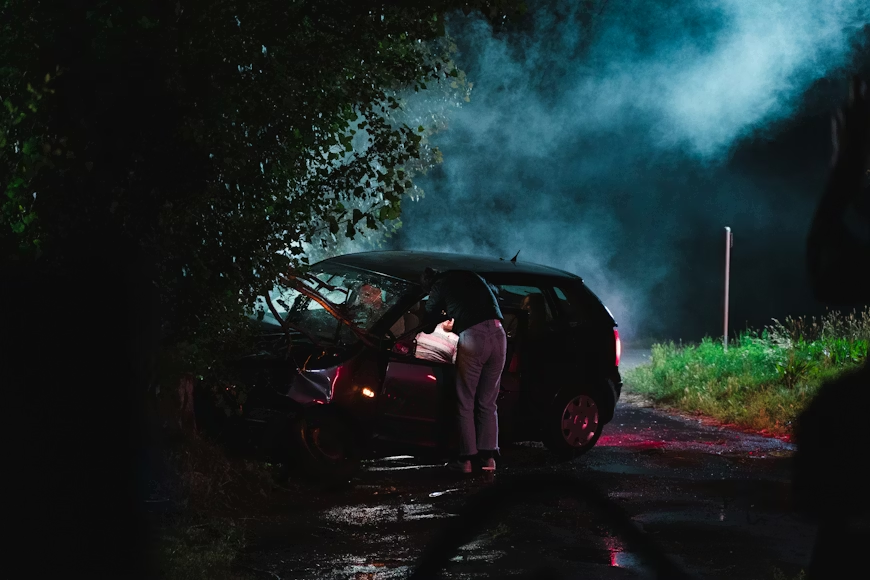
Hollywood always gives the people what they want in car crash scenes. There’s action, blood, gore, and terror. Never consulting a car accident lawyer about your legal rights or picking up the emotional pieces after.
Why would it show the aftermath when fiction is more exciting than reality? The truth is that surviving a car crash and living to retell the experience is as scary as any movie, if not more.
There aren’t people on set to direct you on what to do next or to give advice on insurance claims or personal injury claims. It’s only you attempting to navigate an uncertain part of life that nobody taught you in school.
Entertainment glosses over paperwork, insurance, and stress. We’re here to tell you that the boring aspects are as important when you’re involved in a car accident.
The Crash Is the Story, Not the Consequences
In television and film, car accidents are storytelling shortcuts. Writers use them to introduce conflict, raise stakes, or exit a character quickly.
MovieMaker explains that these scenes are carefully engineered to look dangerous while staying controlled for the cast and crew. The strict safety regulations hide the risks involved in real-life collisions.
Therein lies the problem. Once the crash serves its narrative purpose, the story moves on. There’s no room for insurance calls, physical therapy, or months of disrupted routines.
Those details don’t fit neatly into a 42-minute episode.
Why We Rarely See the Full Stop
The basic elements of real driving are often skipped. A popular thread on Quora debated whether it’s always necessary to show a car stopping with a screech. A sudden impact is more visually effective than a slow, cautious stop. Factually, the latter is how many accidents unfold.
Real Accidents Don’t End When the Scene Cuts
Unlike TV crashes, real accidents don’t wrap up neatly. The consequences can ripple outward for months or years.
Paperwork, Not Plot Twists
Instead of dramatic confrontations, people face forms, phone calls, and uncertainty. Insurance companies ask questions. Medical bills arrive. Decisions need to be made when you’re already exhausted.
Where you reside can be an influencing factor. A 2024 survey released by Smart Growth America found that Little Rock, Arkansas, is the 10th most dangerous metro area for pedestrians in the U.S.
For the most part, car accident victims feel that speaking with a Little Rock auto accident attorney becomes less about blame and more about understanding their options. It reduces the stress during an already overwhelming time.
Car accident injuries can be as traumatizing as the actual incident. As far as drunk driving accident victims are concerned, this is where you call in a law firm. Keith Law Group says that an experienced car accident lawyer helps many navigate car accident claims and protect their rights.
The Community Impact
TV accidents happen in a vacuum. Factual ones don’t. A recent news update reported that a series of collisions in Arkansas left multiple people dead and others injured.
Families and entire communities were affected. These weren’t plot devices. They were tragedies with long repercussions.
The Mental Load Is Heavy
What TV skips entirely is the psychological impact. The anxiety of driving again. The stress of missed work. The emotional whiplash of feeling “fine” one afternoon and overwhelmed the next.
These aren’t dramatic enough for network schedules, yet they’re very real for people involved in crashes.
A Reddit thread on the prevalence of car accidents in television storytelling points out how often these moments are inserted casually. They fast-forward past acknowledging the long-term fallout people experience.
Why TV Keeps Skipping the ‘Boring’ Parts
It’s not because writers don’t care. It’s because the medium rewards momentum.
TV thrives on resolution. The aftermath of a crash (rehab appointments, legal questions, emotional recovery) unfolds slowly and unevenly. That kind of realism doesn’t fit well between commercial breaks or season arcs.
Skipping those details has consequences. It shapes expectations and can make recovery feel longer, harder, and lonelier simply because it doesn’t look like what we’re conditioned to see.
Watching With a More Critical Eye
None of this means we should stop enjoying dramatic moments on screen. But it helps to watch them with context.
Car crashes on television are designed for impact, not accuracy. They skip the boring parts since they are messy, human, and hard to compress into a scene. Those are the parts that matter most when the cameras aren’t rolling.
If you’ve ever felt frustrated watching a character bounce back unrealistically fast, you’re not imagining it. Real life takes longer.
Understanding the difference can make us more patient with ourselves and more empathetic toward others traversing the long road after a car wreck.

Comments (0)
WeGreen is a space for respectful and thoughtful discussion. Harassment, hate speech, personal attacks, and inappropriate language are not allowed and may result in content removal or account action. Please keep things kind and civil.
Please login to post a comment