
Cinema has always relied on spectacle to hold attention, and few elements deliver that spectacle like practical stunts. Long before computer-generated imagery became common, performers and stunt professionals placed their bodies on the line to bring realism to the screen.
There are many stunts in the history of cinema that have captivated audiences. From the duel in Seven Samurai (1954) to the bathroom fight in Mission: Impossible – Fallout (2018), many of them became the core of the storylines.
Explosions, high falls, car crashes, and fight sequences created unforgettable moments, but they also carried real risk. Across decades of filmmaking, several serious mishaps forced the industry to confront the dangers behind the camera and rethink how action scenes are executed.
Early Filmmaking and the Absence of Safeguards
In the early days of cinema, stunt work existed in a loosely organized space. Silent-era actors often performed their own stunts, with little separation between performers and dangerous setups.
There were no formal standards, no protective gear worthy of the name, and almost no oversight. Directors relied on instinct, experience, and a willingness to accept injuries as part of production.
This approach led to countless unreported injuries. Broken bones, concussions, and burns were treated as unfortunate but acceptable outcomes. Studios prioritized speed and spectacle, believing audiences would never know the difference. That mindset persisted well into the mid-20th century, even as productions became larger and more complex.
But things started changing in the 1950s, especially after the incident that led to Vic Morrow’s death. As Remind Magazine notes, Morrow was to perform a stunt involving low-flying helicopters for Twilight Zone: The Movie.
On July 23, 1982, he and two child actors performing the stunt died when the helicopter crashed. The incident went on to rank among Hollywood’s most infamous accidents, reshaping how high-risk stunts were planned and managed in the years that followed.
Why were filmmakers slow to adopt safety precautions in the early decades of cinema?
Early filmmakers operated in an experimental environment where storytelling techniques were still being invented. There was little understanding of occupational safety as a formal concept. Film sets were viewed as creative spaces rather than workplaces, which meant injury prevention rarely entered production planning or budgeting discussions.
Legal Pressure and the Demand for Accountability
As awareness grew, legal responsibility became part of the discussion. Injured performers and their families sought answers beyond studio apologies. Lawsuits highlighted gaps in workplace protections and exposed how loosely enforced safety practices had been.
The legal pressure is more so in places that are home to regular filming. Cleveland, for instance, is home to many filming sets throughout cinema history. The Kid From Cleveland, White Boy Rick, Captain America: The Winter Soldier, The Avengers, and many others were filmed here. In 2024, the Slavic Village neighborhood became a set for Stickshift.
In such locations, conversations about workplace injury law expanded beyond construction sites and factories to the creative industries. Thus, someone who gets injured on a set can hire Cleveland injury lawyers.
According to the Piscitelli Law Firm, attorneys can offer legal guidance for slips and falls, stunt injuries, accident cases, and wrongful deaths on the set. They can help initiate an investigation that can enable the victims to get justice.
Stunt performer Casey Michaels recently got compensation for such an injury sustained while filming a battle scene for Game of Thrones. She sued HBO’s production company, claiming the stunt setup and safety measures were inadequate, leaving her with a career-ending injury. While the company initially defended its practices and suggested performer error, it eventually reached a settlement worth $9.4 million.
High-Profile Accidents That Drew Public Attention
The turning point came when serious injuries and deaths became impossible to ignore. Besides the accident on the set of Twilight Zone: The Movie, many others came to light. The on-set accident when filming The Crow in 1983 is one such example.
Brandon Lee, the son of martial arts legend Bruce Lee, was fatally shot in the abdomen with a prop gun while filming. A fragment of a dummy round left in the weapon was propelled out with a blank during a scene and struck him.
This led to a long surgery and his death in the hospital, a tragedy that shattered the cast and crew. The Guardian says that the tragedy still continues to influence discussions about on-set safety.
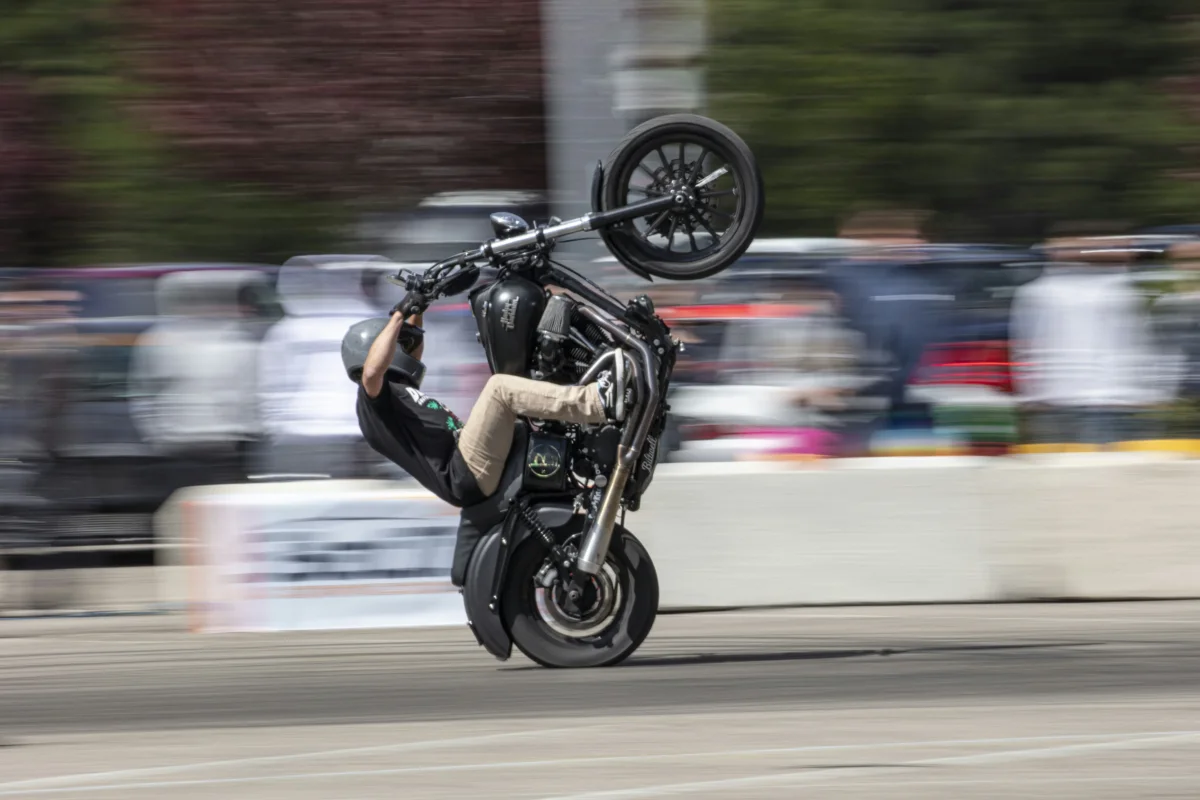
A more recent case that captured public attention occurred during the production of Deadpool 2 in 2017. Stunt performer Joi “SJ” Harris died while performing a motorcycle stunt. The accident raised questions about rehearsal time, protective gear, and decision-making under production pressure.
Why do publicized accidents lead to faster industry change than lesser-known incidents?
Highly visible accidents generate media scrutiny, public outrage, and reputational risk for studios, which accelerates internal reviews and policy changes. When audiences become aware of unsafe conditions, studios face pressure to act quickly rather than quietly resolving issues behind the scenes.
The Introduction of Industry-Wide Safety Standards
As a BBC article notes, The Fall Guy uses its action-comedy format to spotlight the essential yet under-recognised work of stunt performers. It shows exactly how these professionals take physical risks to make actors and action scenes look convincing while rarely receiving credit.
However, things have started changing after multiple landmark cases. The stunt coordinator’s role gained greater authority. Instead of serving purely as technical advisors, coordinators became central figures in production planning. Scripts began undergoing safety reviews, and risky scenes were redesigned when hazards outweighed creative benefits.
Rehearsals became mandatory rather than optional. Stunt performers were given the opportunity to assess conditions, suggest alternatives, and refuse actions deemed unsafe. These changes reduced improvisation during filming, which had previously been a major source of accidents.
How are safety standards enforced on international film productions?
Global productions often operate across countries with different labor laws, requiring studios to meet the strictest applicable standards to avoid legal and logistical conflicts. This has led to more consistent safety expectations, even in regions where formal regulations are less developed.
Stunt mishaps throughout cinema history have left lasting marks on the industry. Each serious incident forced filmmakers to reconsider long-held assumptions about risk and responsibility. From informal beginnings to structured safety systems, the evolution of stunt work reflects hard-earned lessons written through injury and loss.
Today’s productions benefit from those lessons, operating within frameworks shaped by past mistakes. Danger can never be fully removed from action filmmaking. However, the industry now approaches it with greater awareness, preparation, and respect for the people who make movie magic possible.

Comments (0)
WeGreen is a space for respectful and thoughtful discussion. Harassment, hate speech, personal attacks, and inappropriate language are not allowed and may result in content removal or account action. Please keep things kind and civil.
Please login to post a comment